

Hydraulic systems and solenoid valves in tunnel boring machines (TBM)
Overview
Tunnel boring machines (TBMs) are an important technology in modern civil engineering, capable of efficiently and safely digging tunnels for a variety of uses, including transportation and utilities. At the heart of a TBM's operation are the hydraulic system and solenoid valves that provide the necessary power, control and precision for the machine's various functions. This article explores the components, applications, and advantages of hydraulic systems and solenoid valves in TBMs, as well as their future trends.
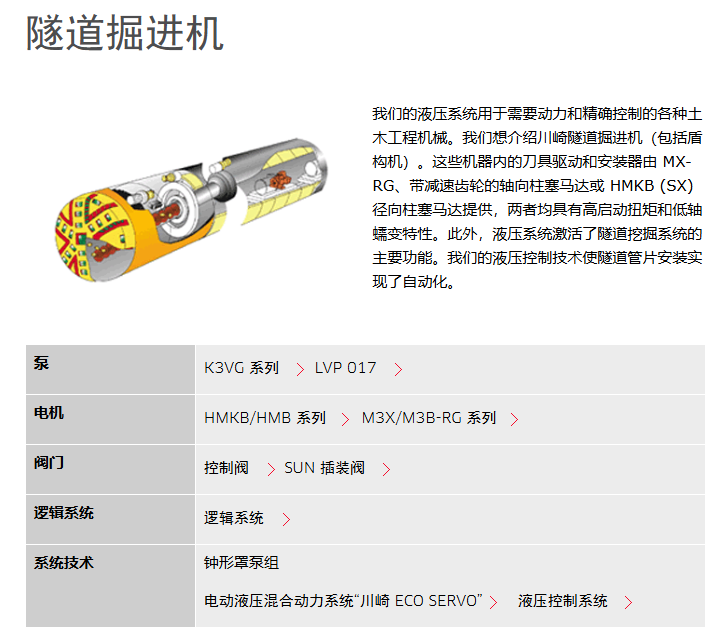
This image shows a tunnel boring machine using SUN’s cartridge valve.
1. Introduction
The advent of TBMs has revolutionized the way underground tunnels are constructed, making digging faster and safer than traditional methods. These machines operate in challenging environments requiring robust systems capable of delivering high power and precise control. Hydraulic systems (enhanced by solenoid valves) play a key role in achieving the performance required for efficient tunnel construction.
2. Hydraulic system of shield machine
The hydraulic system is critical in driving the various movements and functions of the TBM. Hydraulic systems operate according to Pascal's law, which states that pressure exerted on a closed fluid is transmitted evenly throughout the fluid.
2.1 Composition of hydraulic system
The main components of the hydraulic system used by TBM include:
Hydraulic Pumps: These devices convert the mechanical energy of an electric motor into hydraulic energy, producing the high-pressure fluid required to operate a hydraulic cylinder. Depending on the required flow and pressure specifications, different types of pumps are used, such as gear pumps and piston pumps.
Hydraulic Cylinder: A hydraulic cylinder is responsible for converting hydraulic pressure into mechanical motion. They provide the linear motion required for a variety of operations, including advancing the cutter head, advancing the TBM, and adjusting the machine's position.
Hydraulic Oil Tank: The oil tank stores hydraulic oil and allows thermal expansion. It also filters out contaminants and ensures smooth operation of the system.
Hydraulic lines and fittings: They carry hydraulic fluid between components and connect pumps, cylinders, valves and other components. Proper sizing and routing are critical to maintaining efficiency and minimizing friction losses.
2.2 Operation of hydraulic system
The operation of a TBM hydraulic system involves several steps:
A hydraulic pump draws fluid from a reservoir and pressurizes it. Pressurized fluid is delivered through hydraulic lines to cylinders or valves, depending on the desired operation. Hydraulic cylinders then convert hydraulic energy into mechanical motion, allowing the TBM to perform tasks such as digging, steering and stabilization.
3. Solenoid valves in tunnel boring machines
A solenoid valve is an electromechanical device that controls the flow and direction of hydraulic oil in a system. They are an integral part of the hydraulic operation of tunnel boring machines.
3.1 Function of solenoid valve
The working principle of the solenoid valve is the electromagnetic principle. When an electric current passes through a coil in a valve, it creates a magnetic field that moves the plunger or armature, opening or closing the valve. This action regulates the flow of hydraulic oil.
Solenoid valve type:
Two-way valves: These valves control flow to a single actuator, allowing it to open or close.
Three-way valves: These valves can control flow to two different actuators, directing fluid to one or the other, thereby facilitating movement in multiple directions.
Proportional valves: These valves provide variable control of fluid flow, allowing precise control of the speed and position of hydraulic actuators.
3.2 Application of solenoid valve
In tunnel boring machines, solenoid valves are used for:
Thrust control: Adjusts the thrust exerted by the hydraulic cylinder to propel the machine.
Cutter Head Operation: Controls the position and movement of the cutter head for efficient digging.
Steering mechanism: directs hydraulic flow to adjust the trajectory of the machine during tunneling.
Safety features: Implement emergency shutdown procedures by quickly cutting off the hydraulic oil supply to prevent accidents.
4. Advantages of hydraulic system and solenoid valve
The integration of hydraulic systems and solenoid valves in tunnel boring machines offers many advantages:
4.1 High power to weight ratio
Hydraulic systems can generate huge amounts of force while maintaining compact dimensions, which is crucial in the tight spaces of tunnel construction. This capability enables the TBM to perform heavy-duty missions without adding weight.
4.2 Precision control
Hydraulic movement can be precisely controlled using solenoid valves. This precision is critical to maintaining the alignment of the TBM and ensuring optimal cutting performance, thereby increasing the overall efficiency of the tunneling process.
4.3 Enhanced security
Hydraulic systems are designed with safety features including pressure relief valves and emergency shutdown systems. These features minimize the risk of accidents and ensure safe operation in challenging environments.
4.4 Flexibility and adaptability
The hydraulic system can be easily adjusted to suit different tunnel construction conditions and requirements. The ability to adjust flow and pressure enables tunnel boring machines to adapt to different geological challenges.
5.Future trends
In the future, the development of shield machine hydraulic systems and solenoid valves is expected to focus on the following key areas:
5.1 Integration with automation and IoT
The integration of Internet of Things (IoT) technology into hydraulic systems will enable real-time monitoring and remote control. This development will increase operational efficiency and reduce downtime through predictive maintenance.
5.2 Advanced Materials and Fluids
Research into new materials for hydraulic components and environmentally friendly hydraulic fluids will increase system durability and reduce environmental impact. Innovations in fluid technology may improve performance and reduce maintenance needs.
5.3 Improve energy efficiency
As sustainability becomes increasingly important, there will be a focus on designing energy-efficient hydraulic systems to minimize power consumption while maintaining performance. This transition may include the development of variable displacement pumps and energy recovery systems.