

What is a suction control valve (SCV)
What is a suction control valve
The oil suction control valve (inlet metering valve) is one of the most important components in the diesel engine fuel supply system and the most important part of the throat.
It controls the amount of oil entering the rail to meet the pressure setting requirements of the common rail system, and forms a closed-loop control of rail pressure together with the rail pressure sensor. It is an electromechanical component, and problems with the circuit or mechanical components will cause it to work abnormally. Due to fuel quality issues, it is common for the SCV valve to become stuck or clogged, directly causing the diesel engine to not work properly. To understand how a suction control valve (SCV) works, let’s first look at the following points.
What is common rail
The common rail is a double rail, a high-pressure rail and a low-voltage rail. After the diesel comes out of the fuel tank, it passes through the diesel filter element and enters the high-pressure oil pump. The high-pressure oil pump comes out with two rails, namely the red high-pressure rail and the yellow low-pressure rail.
In the high-pressure rail, the diesel fuel from the high-pressure oil pump enters the high-pressure common rail pipe, and then enters the injector. It is sprayed out from the injector into the combustion chamber of the piston cylinder liner, mixes with the air in the combustion chamber, and is discharged through the exhaust pipe.
The low pressure rail is where the diesel fuel exits the high pressure fuel pump and joins the excess diesel from the injectors before returning to the tank.
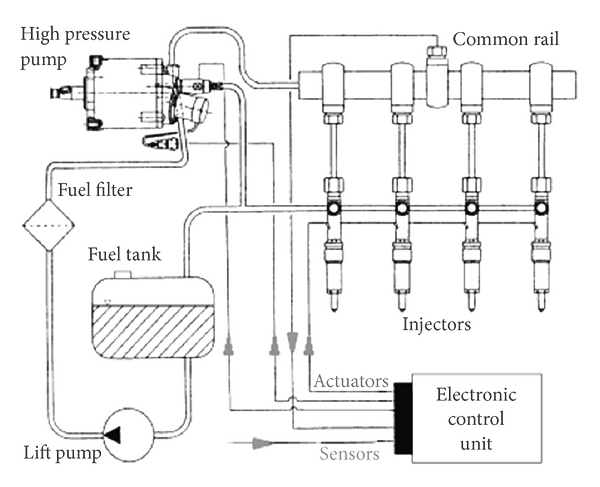
However, all fuel flow in the diesel engine oil circuit is detected by sensors, and the pressure signal is converted into an electrical signal and then input to the computer. The computer performs logical operations and then outputs it to control the actuator to complete the above actions.
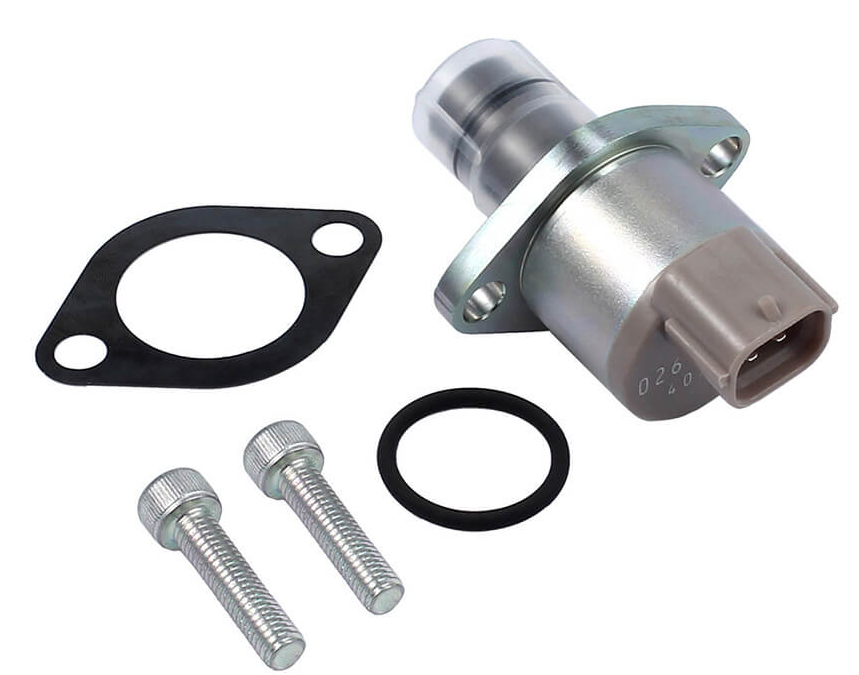
The suction control valve (fuel metering valve), referred to as IMV, EFC/MEUN, SCV, PCV, etc., is a mechatronic solenoid valve component, generally installed on the high-pressure fuel pump, controlled by the engine ECU, and measured by the rail pressure sensor Perform closed-loop control; the plug has two wires, which are the power supply voltage and the signal voltage. The engine control computer It is controlled by PCM, so the suction control valve is actually a rail pressure regulator. It is a variable frequency and duty cycle signal. Use a multimeter to measure its resistance, voltage, rating, and duty cycle signal, and you can get its value at the same time. Information such as signal period, pulse width, trigger current, etc. can make a comprehensive evaluation of its performance characteristics and the operation of the entire fuel system.
The engine control computer PCM controls it through PWM control, also called duty cycle control. It changes the area of the internal oil passage through the size of the current pulse to control the fuel flow. The general operating frequency of solenoid valves is between 100hz and 200hz. If the frequency is too low, oil will enter in the form of pulsation, causing unevenness. If the frequency is too high, the spring begins to close before it is sucked up, so the solenoid valve does not work.
The maximum operating current of the suction control valve (fuel pressure regulator) is 1.8A, the normally closed current at idle speed is 700±20mA, and the normally open current is 1400±20mA.
SCV valve control voltage is 12V or 24V